
Active Warrants in San Miguel County
San Miguel County posts no public active-warrant list. Nothing is downloadable either. The county's public access path runs through the courts and agencies instead, so a warrant check starts somewhere other than a sheriff roster. Open New Mexico Case Lookup and find the case and the issuing court. Then ask that clerk for the current status. A blank page is not clearance. It does not prove no warrant exists, and it says nothing about whether deputies serve process. The court that signed the order keeps the controlling case information, so make the clerk your answer.
Why San Miguel County Has No Public Active-Warrant Roster
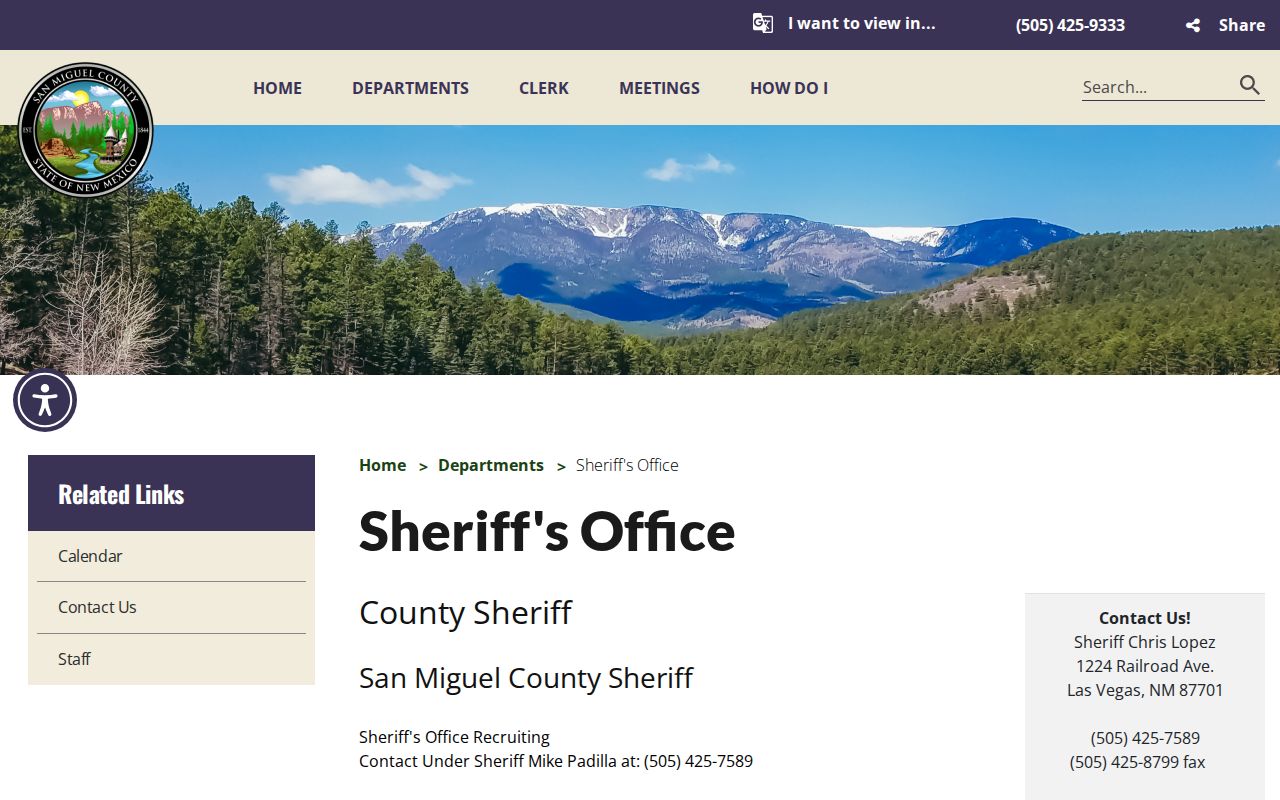
The official Sheriff's Office page covers the San Miguel County sheriff's law-enforcement, prisoner, detention, and service duties. No warrant search box appears. There is no roster download, no warrant division extension, and no county most-wanted interface. The Detention Center lookup notice has also been down during a Jail Management Service transition. Those are web limits, not proof an agency holds no records. So check court-first. Find the case in Case Lookup, then call the right clerk: District Court at (505) 425-7281, Magistrate Court at (505) 425-5204, or Las Vegas Municipal Court at (505) 425-9403. Service questions go to the Sheriff at (505) 425-7589. Custody questions go to Detention at (505) 454-7403.
How the San Miguel County Active Warrant List Works
San Miguel County has no public roster to describe. No fields, no export, no update schedule. New Mexico's AOC workflow does show how qualifying Failure to Appear in Court Warrant information travels from a court into a Department of Public Safety law-enforcement workflow. That link is internal. It is not a public DPS search tool. Browsing a list is not how a check works here. Search the public case tool and note the court. Ask the clerk for the procedural status, and ask each agency only for the piece it keeps. A clerk can explain a cancellation or surrender entry that a case screen shows only in part.
Official status route
Case Lookup for orientation
Issuing clerk for court status
Sheriff for service questions
Detention for custody questions
New Mexico's DPS Automation Is Not a Public Warrant Search
The official warrant-triage guide places San Miguel County's District and Magistrate courts in the DPS automation group. The AOC SOP covers court creation, execution conditions, comments, system transmission, and final statuses. A court record can therefore carry an operational law-enforcement component. No public statewide roster comes with it. Skip the workflow as a shortcut. Ask the court. The public can ask whether the court has recorded service, cancellation, surrender, or another final disposition, while the detailed system path stays with authorized court and law-enforcement users.
What an Active San Miguel County Warrant Shows
Case Lookup may show less than the order. A San Miguel County clerk can explain what the official forms capture and a case screen leaves out. Ask before assuming.
| Court and case | State, county, city, court, and case number identify the issuing venue. A safe sample remains case number on file. |
|---|---|
| Type or trigger | FTA, subpoena failure, release violation, contempt, unpaid fines or costs, probation, first-offender failure, or probable-cause arrest process. |
| Execution scope | The signed form may specify city, county, state, or another jurisdiction, subject to the form's limits. |
| Law-enforcement entry | The form can identify the information system destination. This is not proof that the public can search that system. |
| Disposition | Served, canceled, surrender, issued in error, and returned unserved are separate final terms. |
A Detainee Lookup Is Not an Outstanding-Warrant List
The San Miguel County Detention Center page warns that the public detainee lookup is temporarily out of service during a Jail Management Service transition. Custody is a narrower question anyway. Even working, a detention lookup would not show an unserved warrant, a canceled record, or a warrant held by another court. Keep the questions apart. For current custody, call (505) 454-7403. For warrant status, call the issuing clerk. The Las Vegas Police duty page describes service roles, not a complete public roster. A detention answer is not a court disposition.
Most-Wanted Lists and San Miguel County Active Warrants Are Different
San Miguel County has no official most-wanted roster. An agency that built one would publish a selection, not the full active-warrant universe. No local tip or reward program shows either. A third-party list is no substitute. Neither is a social-media post or news item. The related Most Wanted page explains the official-source gap and the Safe Surrender context without republishing names or photographs. Your status question still belongs to the issuing court.
If Your Name Is on a San Miguel County Warrant List
Start by confirming the record is really yours. Match the case number, the court location, and the clerk contact against the official record. Ask the San Miguel County clerk whether the matter is active, served, canceled, surrendered, issued in error, or returned unserved. Ask what steps come before appearing.
Important: A web result cannot tell you whether a walk-in appearance, hearing, payment, bond, or scheduled surrender is safe or sufficient.
If the court says a final action was entered, ask whether the law-enforcement system caught up. A restricted or missing result may reflect access limits. It may not be the whole answer.
Active, Served, Canceled, and Surrendered Status Terms
The AOC SOP describes warrant endings with more care than a plain active or inactive tag. A served warrant can mean an arrest, a booking, service in another county, or a district booking notice. Canceled can come from a withdrawal or a motion the judge granted. Surrender tells you the outstanding issues got worked out through the court's process. Issued in Error points to a clerical slip or the wrong person, while Returned Unserved means the paperwork came back without anyone being served. San Miguel County readers who know these terms can read a case docket with far more confidence.
| Term | What to ask the clerk |
|---|---|
| Served | What arrest, booking, or return event was recorded? |
| Canceled | Was a cancellation or quash order entered? |
| Surrender | What issue was addressed and when was the system updated? |
| Issued in Error | What correction was made to the case or person record? |
| Returned Unserved | Does the court still consider process outstanding? |
Why Restricted San Miguel County Cases May Not Appear
Some San Miguel County cases stay off public view by design. New Mexico access rules shield juvenile matters, protective-order files under the Family Violence Protection Act, personal identifiers, and certain court documents, and municipal records carry their own display limits. A sealed, protected, or investigative file may simply sit outside the public search. A blank result, though, is no proof that no court process exists.
Key access rule: Confirm a current status with the originating clerk and use judiciary IPRA for a court-held record or the County Document Center for a county-agency record.
When you write, name the San Miguel County case, the holder of the record, a date range, and the record type you want. The law permits exemptions and redactions, so the response may leave some fields of a warrant form out.
Use IPRA for an Existing San Miguel County Record
The New Mexico Inspection of Public Records Act gives you a written route to an existing San Miguel County record, yet it cannot force an agency to build a fresh active-warrant list. Use the judiciary portal for court files. It asks for the actual Fourth District court location plus a plain description of the court record you seek. The County Document Center form covers county departments instead, such as the Sheriff or the Detention Center. A strong request cites something concrete. That might be a known case number, a Form 9-212C order, a service return, a cancellation order, or a date range. If the paper belongs to a different court or agency, ask the record holder to say who else keeps it. And keep private identifiers from any disclosed record out of publication.